
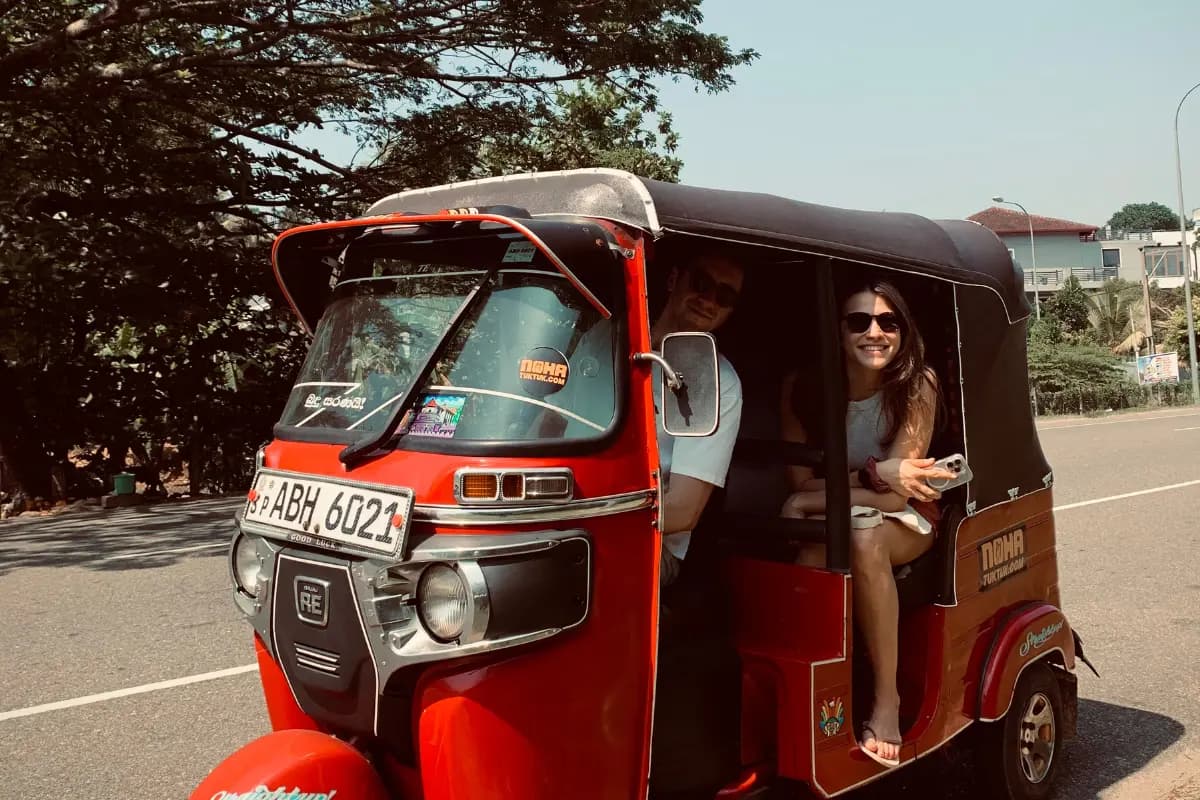
Yes — a foreign visitor can drive in Sri Lanka, on any vehicle, once two things are in place: a valid licence from home, and a local permit issued on top of it. Your home licence alone is not enough here, and neither is an International Driving Permit (IDP) by itself. There are two ways to get the local permit, and which one suits you comes down to whether you hold an IDP and what you plan to drive.
For the two permits compared fee by fee, see the full permit guide. This page is the rest of the picture for driving in Sri Lanka as a foreigner — who is eligible, on what licence, and the order to sort things out in.
Can foreigners drive in Sri Lanka?
The law recognises a foreign licence only once a Sri Lankan permit is issued alongside it. Two bodies issue that permit, and they are not interchangeable:
- The AAC recognition permit, from the Automobile Association of Ceylon. Valid six months, covers every vehicle including tuk tuks, and needs an IDP plus your home licence.
- The DMT temporary licence, from the government’s Department of Motor Traffic. Valid one to twelve months, covers scooters, motorbikes and cars but not tuk tuks, and needs no IDP.
The system is the same whether you are here for two weeks or six months — only the permit length changes. Renting a tuk tuk removes the choice: the AAC is the only permit that covers a three-wheeler. Not sure which applies to you? The permit checker settles it in three questions.
What you need
| A valid home licence | Held at least a year, and still valid for the whole of your stay. |
| Your licence in English | Or a certified English translation, for the DMT route. The AAC route uses your IDP for this instead. |
| An International Driving Permit (IDP) | For the AAC route only — get it at home; it cannot be issued once you have left. The DMT route does not need one. |
| Passport and visa | Your passport and valid visa or entry permit, for the DMT counter at the airport. |
| Minimum age 18 | The motorbike has a firm minimum rider age of 18. Scooters and cars follow the class on your home licence. |
- Minimum age
- 18 for the motorbike; home-licence class for scooters and cars
- AAC recognition permit
- Valid 6 months · every vehicle · IDP required
- DMT temporary licence
- Valid 1–12 months · no tuk tuks · no IDP · airport counter open 24 hours
- Driving without one
- LKR 25,000–50,000 fine · vehicle held · rental insurance void
Getting road-legal, step by step
- Decide which permit fits. The AAC if you have, or can still get, an IDP; the DMT if not. Renting a tuk tuk means the AAC either way.
- Before you fly. Going the AAC route? Get an IDP from the licensing body or motoring association at home — it takes minutes there and cannot be issued once you have left the country. Going the DMT route with a licence that is not in English? Get a certified translation.
- On arrival, or before it. Collect the DMT permit yourself at Bandaranaike International Airport — the counter is in arrivals, past customs, open 24 hours — or let us handle the AAC application before you land. Either way it is charged separately from the vehicle.
- Carry it from day one. Police checkpoints ask foreign drivers for the local permit, so keep it on you whenever you drive.
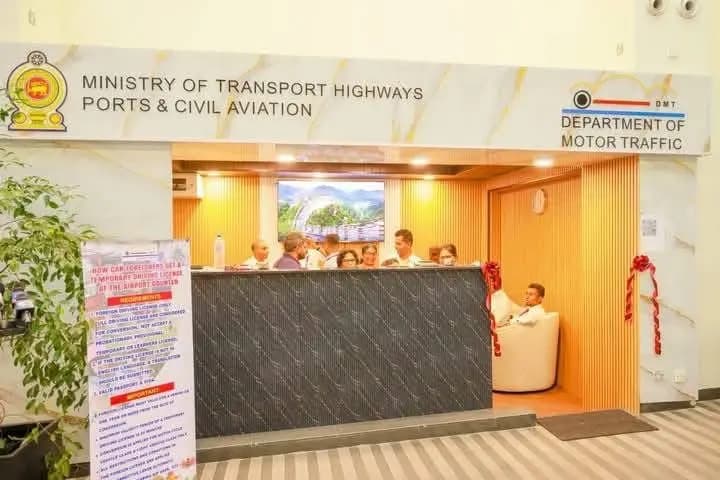
The AAC and DMT comparison lists every document and the current fees for both routes.
Rule of thumb: hold an IDP and the AAC route wins — cheaper, longer, and the only one good for a tuk tuk. No IDP, and the DMT counter at arrivals is the answer, open around the clock so you can pick it up on the way through.
Driving in Sri Lanka on a UK, Indian, EU, US, Australian or Canadian licence
Nationality changes nothing about the process — no passport skips the local permit, and none is barred from one. Every foreign licence goes through the same AAC or DMT route set out above. The one detail that varies by country is whether your licence is already in English, which the DMT route requires:
- Licence already in English — UK, Ireland, US, Canada, Australia, New Zealand, South Africa: the DMT counter takes it as-is, no translation. For the AAC route you still need an IDP obtained at home.
- Licence not in English — India, Germany, France, the Netherlands, Italy, Spain, and most other countries: the DMT route needs a certified English translation alongside it, or take the AAC route, where the IDP is multilingual by design and covers the language for you.
UK licence. It is in English, so the DMT counter at the airport needs nothing extra. For the AAC route, get your IDP from a motoring authority at home before you fly — it cannot be issued once you have left.
Indian licence. This is the one that trips people up. Many licences are in a regional script rather than English, so for the DMT route bring a certified English translation, or get an International Driving Permit from your RTO before travelling and use the AAC route instead. A licence held less than a year is not accepted on either route.
EU or EEA licence. Photocard EU licences carry some English but are not fully in it, and the DMT counter has waved simpler ones through while turning others back — a certified translation or an IDP removes the guesswork.
US licence. In English and accepted at the DMT counter as-is. A US IDP is issued only by AAA or AATA, and only inside the United States, so sort it before you fly if you want the AAC route.
Australian or Canadian licence. Both in English and accepted directly for the DMT route. IDPs come from the state auto clubs in Australia or the CAA in Canada, before departure, for the AAC route.
Whichever licence you hold, NOHA handles the AAC application for renters before you arrive — send a photo of your licence and IDP and it is done before you land. The permit guide answers the India-, UK- and Canada-specific versions of this question one by one.
On the road
- Drive on the left.
- Carry your permit, passport and rental agreement whenever you drive. Since early 2025 there have been dedicated roadside checks on foreign drivers, prompted by a rise in tourist road accidents.
- Helmets are mandatory for rider and passenger on a scooter or motorbike; seatbelts in a car. No alcohol at the wheel.
- Tuk tuks are capped at 40 km/h and barred from every expressway — the full rundown is in tuk tuk driving laws.
For two-wheelers specifically — deposit, insurance, and the riding experience you need before you collect one — see the scooter rental requirements guide.
If your permit runs out before you leave
Both permits cover a fixed period, not the length of your visa. Stay past the date on the permit and you renew it the same way you first got it — a fresh DMT permit at a DMT office, or a new AAC permit by application. Neither asks you to leave the country to do it.
NOHA renters don’t need to make the trip themselves: send us the documents and we handle the paperwork, and the replacement permit is couriered to wherever you are staying — which is how Barry, quoted below, got a new one when the permit he collected at the airport expired mid-trip.
If you drive without the local permit
Police treat a foreign licence, or an IDP used on its own, as driving without a valid licence. Fines under the Motor Traffic Act run from LKR 25,000 to 50,000, and the vehicle can be held at the checkpoint until a licensed driver comes to collect it.
The bigger exposure is insurance. Cover on a rented vehicle depends on the driver being legally licensed to use it — drive without the permit and a crash, however minor, can become yours to pay for in full.
Only the AAC and the DMT issue what you need. No other office or agent is authorised to.