
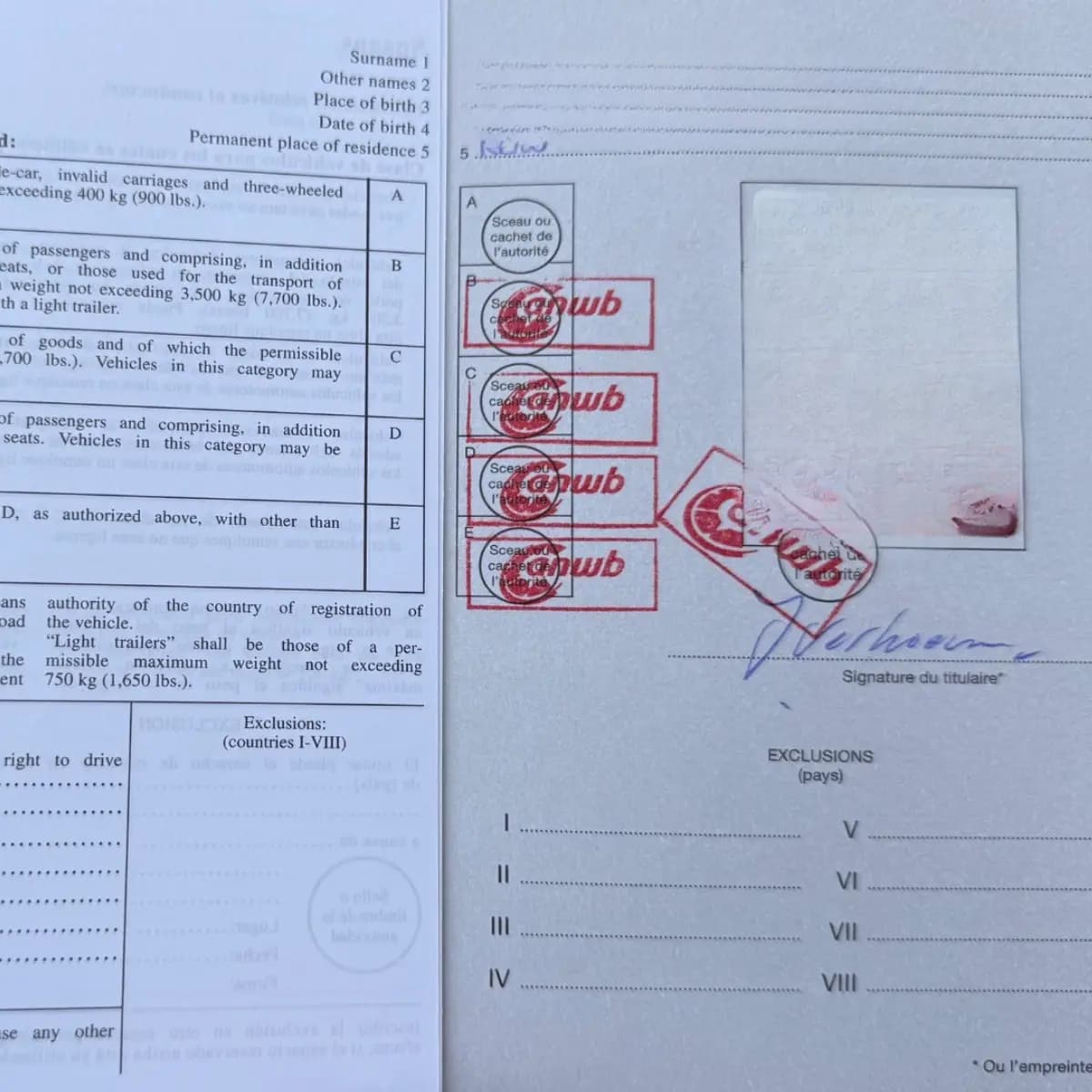
Both countries drive on the left, so the road is the easy part. The paperwork is the harder one, and for an Indian licence it turns on a single question: is the licence in your hand in English?
The short answer is yes, Indians can drive in Sri Lanka. An Indian licence is recognised once a local permit is issued on top of it. The licence alone is not enough, and neither is an International Driving Permit (IDP) by itself. This page is the Indian-licence version of driving in Sri Lanka as a foreigner.
Can Indians drive in Sri Lanka?
Yes, on a tuk tuk, scooter, motorbike or car, once you hold the right permit. Two bodies issue it, and they are not interchangeable:
- The AAC recognition permit, from the Automobile Association of Ceylon. Valid six months, covers every vehicle including tuk tuks, and needs an IDP plus your Indian licence.
- The DMT temporary licence, from the government’s Department of Motor Traffic. Valid one to twelve months, covers scooters, motorbikes and cars but not tuk tuks, and needs no IDP.
- Indian licence on its own
- Not valid in Sri Lanka without a local permit
- Held for
- At least a year, and valid for your whole stay
- AAC recognition permit
- Valid 6 months · every vehicle, tuk tuks included · IDP from your RTO required
- DMT temporary licence
- Valid 1–12 months · no tuk tuks · no IDP · airport counter open 24 hours
Which route fits an Indian licence
Two facts decide it: what you want to drive, and whether you can get an IDP before you fly.
| You want a tuk tuk | AAC permit, with an IDP from your RTO. The DMT permit does not cover three-wheelers. |
| You can get an IDP before you fly | AAC permit. It costs less than the DMT permit, lasts six months and covers every vehicle. |
| Licence fully in English, no IDP, and you want a scooter, motorbike or car | DMT counter at the airport. No IDP needed, and no translation. |
| Licence not fully in English, no IDP | DMT counter, with a certified English translation alongside your licence. |
Some Indian licences are printed in a regional script rather than in English. The DMT route needs the licence in English, or a certified English translation alongside it. The AAC route sidesteps the question, because the IDP is multilingual by design. Not sure which applies to you? The permit checker settles it in three questions, and the AAC and DMT comparison has the fees for both.
Getting an IDP from your RTO
An IDP is issued by your Regional Transport Office (RTO) in India, before you leave. It cannot be issued once you are abroad, and it is the one document the AAC route cannot do without.
- Your Indian licence must have been held at least a year and stay valid for the whole of your stay. A licence held for less than a year is not accepted on either route.
- The IDP only works alongside your Indian licence, so carry both.
- Left it too late? The DMT counter needs no IDP. That is fine for a scooter, motorbike or car, and no use for a tuk tuk.
Check the class on your licence
The Sri Lankan permit follows the vehicle classes on your home licence. Look at the classes printed on yours (LMV covers cars and MCWG covers geared motorbikes, for example) and pick a vehicle they cover. The motorbike also has a firm minimum rider age of 18.
Renting with an Indian licence
Send us a photo of your licence and your IDP, and we handle the AAC application before you land. It is charged separately from the vehicle. Would you rather take the DMT route? Collect it yourself at the counter in Bandaranaike International Airport arrivals, past customs. It is open 24 hours.
Either way, every person who drives needs their own permit, so tell us how many drivers there will be when you book. Then pick the vehicle: tuk tuk, scooter, motorbike or car. A tuk tuk always means the AAC route.
If you drive without the permit
Police treat a foreign licence, or an IDP used on its own, as driving without a valid licence. Fines under the Motor Traffic Act run from LKR 25,000 to 50,000, and the vehicle can be held at the checkpoint. Since early 2025 there have been dedicated roadside checks on foreign drivers.
The bigger exposure is insurance. Cover on a rented vehicle depends on the driver being legally licensed to use it, so a crash, however minor, can become yours to pay for in full.
Holding a UK, EU, US, Australian or Canadian licence instead? The foreigners guide covers each one.